

School does a lot more than teach book chapters. It shapes how a child talks, thinks, handles mistakes and believes in themselves. That is why structured K-12 education matters. It gives children one clear path from kindergarten to Class 12, where every year builds on the last.
If you are looking for the best English & Gujarati medium school in Vadodara, it helps to understand how this kind of schooling works first. Once you know what to look for, the choice gets much easier.
However, why is K-12 education in an organised manner important, and how can it help children at various stages of growth?
What Is Structured K-12 Education?
This is a continuous learning process that starts from kindergarten right up to Class 12. The next grade builds upon the previous one, and there are no one-time grades.
Children start off with basic ideas and move on to complex ideas. In addition, children gain their social and practical skills along the way.
The process involves three broad categories:
- Preschool age: play-based basics
- Primary to middle level: development of core skills
- Senior level: depth and direction
Since the process is seamless, educators are able to identify learning gaps. A small confusion in Class 3 gets fixed in Class 3, not discovered painfully in Class 9.
Why Is a Structured Learning Path Important?
1. It Builds Strong Academic Foundations
Hard topics feel easier when the basics are solid. A child who is comfortable with numbers in primary school will find fractions and algebra far less scary later.
Languages work the same way. Early reading and vocabulary building make writing and speaking easier in higher classes.
A connected curriculum makes sure no child moves ahead while a key concept is still shaky.
2. It Encourages Consistent Learning Habits
Activities performed on a daily basis teach children time management and task completion skills. Even though it does not look much, it all adds up.
A student who revises a little every week in Class 7 will probably feel calmer during board exam season. Good schools support this with:
- Light, age-fit homework
- Regular revision plans
- Honest teacher feedback
- Open class discussions
3. It Supports Emotional and Social Development
School is often the first place a child learns to work with people outside the family. They share, argue, make up and try again.
Team projects, sports, storytelling and class presentations build confidence quietly. A kind classroom also lets children ask silly questions without fear. That matters, because a child who feels safe usually learns more.
4. It Prepares Students for Future Choices
Older students need more than textbook answers. They need to think clearly, speak well and understand what they enjoy.
From science experiments to creativity classes to computer classes, students get a feel for different streams. As they move up into Classes 11 and 12, they will be able to make decisions based on their own thoughts and not just copy others.
How Does K-12 Education Support Different Learning Needs?
Children do not learn in the same way. The system allows teachers an outline that helps them see these differences and adapt accordingly. For example, if fifty percent of the class is having difficulties with fractions, the teacher can use visuals first. Quick learners, meanwhile, get tougher problems so they stay interested.
Regular assessments help parents too. They show whether a child needs:
- Extra practice
- A new explanation
- More challenge
Marks alone are not the full story, though. Class participation, project work, creativity and steady improvement all say something about a child’s growth.
Choosing Between English and Gujarati Medium Education
For families, the language of teaching is a big decision. The good news is that both options can work well when the teaching is strong and children get proper support.
English medium gives daily exposure to English reading, writing and speaking. That can help later in higher studies and in workplaces where English is common.
Gujarati medium lets children learn in a language they already hear at home. It is easier for concepts to be understood in early years, and it allows children to remain close to their culture and literature.
While looking at different schools, think about these questions:
- Do the teachers explain things well?
- Is language development encouraged?
- Is help available?
- Is there continuity in the curriculum?
- Are the children encouraged?
What Should Parents Look for in a K-12 School?
Choosing a school is a long-term decision, so look beyond the shiny building.
Curriculum and Teaching Methods
Check whether the school follows its board’s requirements properly. Teaching must have an explanation, discussion, activity, and assessment in it.
In Gujarat, the majority of the schools can be either affiliated with GSEB (Gujarat Secondary and Higher Secondary Education Board) or CBSE. It is necessary to be sure about that before taking admission.
Teacher Support and Communication
Teachers are the pillar of any school. Ask how they share results, how often they meet parents and what they do when a child falls behind.
Activities Beyond Textbooks
Sports, music, art and group projects help children find what they enjoy. They should add joy to school life, not extra pressure.
Safety and Accessibility
Look at classroom conditions, hygiene, transport and supervision. Think about travel time too. A shorter, easier commute means a more rested child.
Common Mistakes Parents Should Avoid
Even careful parents can slip up. Here are the usual ones:
- Going only by reputation: a popular name may not suit your child.
- Grades only: confidence and happiness are important too.
- Without considering language: can your child cope with the classes?
- Ignoring logistics: money, scheduling, transportation, and communications are important.
- Waiting too long: talk to teachers early, before small problems grow.
The best decisions look at both today’s needs and your child’s long-term growth.
FAQs
1. What is the main benefit of K-12 education?
It allows for a complete educational process from kindergarten up to class 12. The children acquire knowledge and confidence that help them learn further.
2. Why is childhood education important?
The early stages include language, arithmetic, social behaviour, and learning strategies, which create the foundation of easy learning in later classes.
3. Is English medium better than Gujarati medium?
Not automatically. Teaching quality, language support, curriculum and your child’s comfort matter far more than the label.
4. How can parents identify a good K-12 school?
Review the curriculum, board affiliation, teaching style, safety, activities and parent communication and also ask what support is available for children with different learning needs.
5. How can I find the best English & Gujarati medium school in Vadodara?
Compare schools on teaching quality, curriculum, facilities, student support and language development. Visit the campus, ask plenty of questions and see how children actually behave in class.
Conclusion
A structured K-12 journey gives children the time and guidance to grow in studies, friendships and confidence. From the initial alphabets to the final board exams, all the stages put a brick into the base.
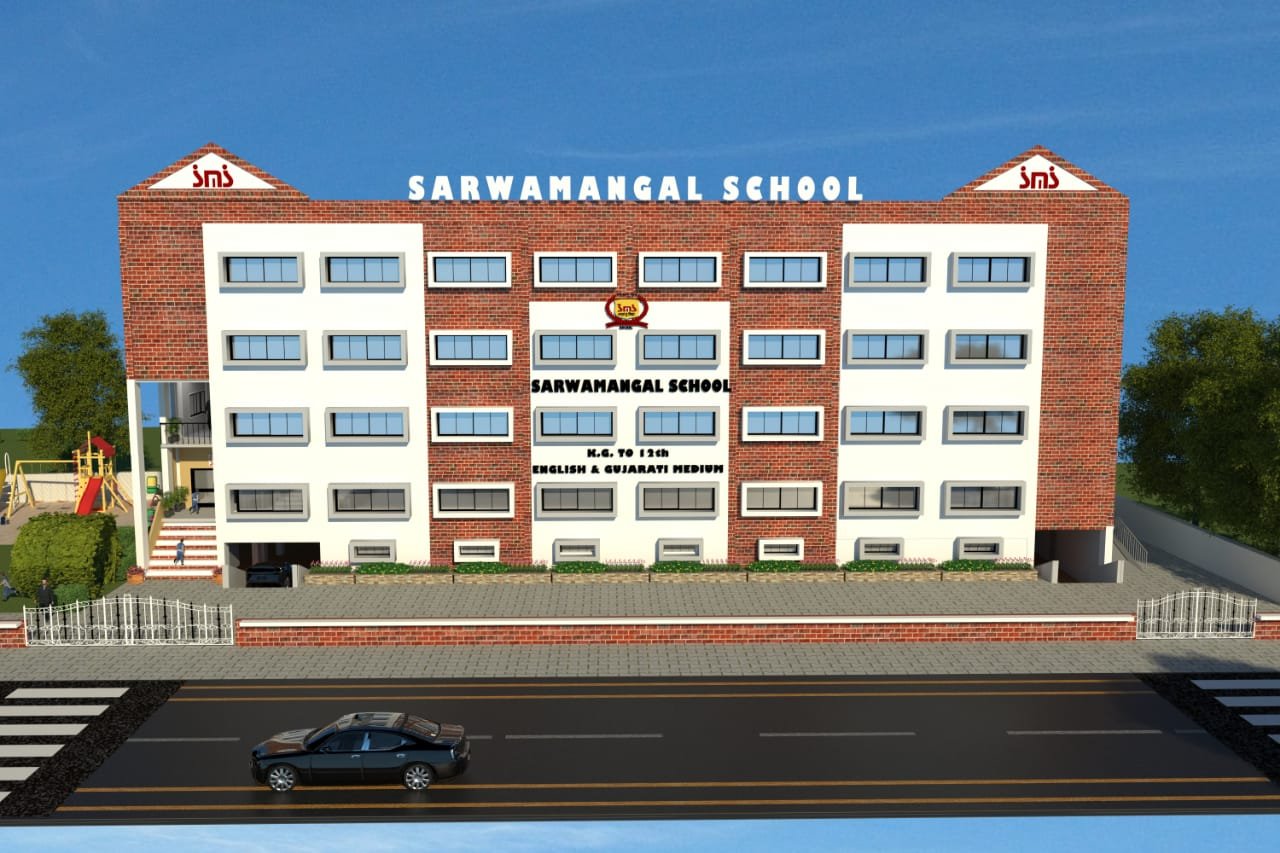
For parents who wish to compare schools in Vadodara, look for an institution that will help the kids grasp their studies and explore at ease. Visit to Sarwa Mangal School to know more.