


A child’s early years are full of curiosity, challenges and a strong desire to learn. A child learns lessons through different experiences from sharing toys to noticing colours. That is why preschool years are very important for learning.
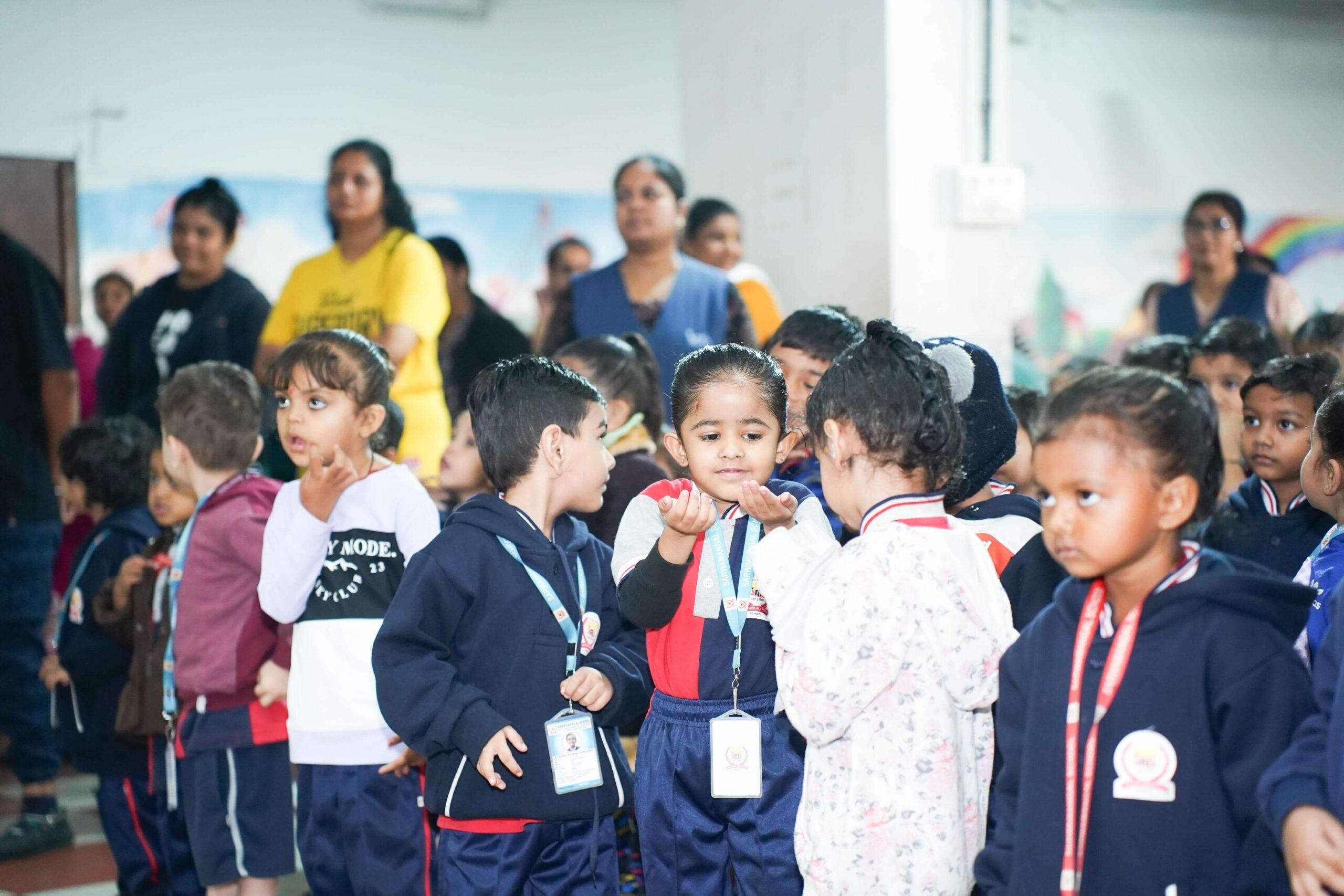
Play-based learning makes learning enjoyable for children and helps them interact, experiment, create, and engage with peers. Children learn through games, storytelling, music, art, puzzles and hands-on activities, rather than through books and worksheets alone.
If you’re searching for the best nursery school in Vadodara, knowing how this approach works will help you judge schools better. A good preschool is more than a safe room. This is where your child will feel happy, confident and learn at her own pace.
What Is Play-Based Learning in Early Childhood Education?
Play-based learning doesn’t mean kids just run around all day with no structure. This involves teachers creating an activity that appears to be a game but has been thoughtfully designed to teach something new.
For example, a teacher may give children a toy shop set. While “buying” and “selling”, kids practise counting, speaking, sharing and turn-taking.
Typical play-based activities include:
- Sand and water play
- Building blocks and puzzles
- Role play (doctor, shopkeeper, vegetable vendor)
- Storytelling and rhymes
- Art, clay and craft work
- Music, dance and simple steps
Why Is Play-Based Learning Important for Nursery Children?
The early years are when children grow fastest in body, feelings and thinking. Play supports all three together.
1. Improves Communication and Language Skills
Through stories, rhymes, and role-playing, children have good reasons for speaking. Kids roleplay, buying-selling and also learn manners, question asking, and name recognition.
Slowly, their vocabulary improves, and listening as well as speaking skills improve.
2. Develops Social Skills and Teamwork
While playing together, children learn to share, wait for a turn and follow simple rules.
Fights over a toy do happen. With a teacher’s gentle help, kids learn to say how they feel and sort it out. That’s good practice for life.
3. Encourages Creativity and Imagination
Children communicate their thoughts and ideas through painting, clay work, music and pretend play.
A child pretending to construct a house is exercising his choice and possibilities. This is where creativity comes into play.
4. Strengthens Physical and Motor Skills
Running, jumping, dancing, threading beads and stacking blocks all build coordination.
Small-hand activities also get fingers ready for holding a pencil later.
5. Builds Confidence and Problem-Solving Abilities
A child feels proud and happy when they complete a puzzle or a tower.
They also understand failure is part of the normal process. They don’t quit; they try another way. Independence and patience grow from there.
What Should Parents Look for When Choosing a Play School in Vadodara?
Vadodara has plenty of options, so look past shiny brochures. Teaching style, staff, safety and daily routine matter just as much.
A Child-Friendly Learning Environment
Classrooms should feel clean, bright and tidy, with age-suitable material with an easy approach. Children should be free to explore, not stuck in chairs for hours.
Trained and Caring Teachers
Teachers shape a child’s early experience. On your visit, watch how they talk to the children. Are they patient? Do they warmly accept introverted kids into the group?
A Balanced Daily Routine
An ideal day involves a combination of the following activities:
- Free and guided play
- Stories, songs, drawings
- Physical activity outdoors
- Rest and healthy snacks
The child requires both order and freedom.
Safety and Hygiene
Look for hygiene, safe technology, and security. Ask who supervises outdoor play and what happens in an emergency.
Also ask how the school keeps parents informed. Regular updates show a school that takes care seriously.
Age-Appropriate Teaching Methods
Toddlers shouldn’t be loaded with worksheets or made to memorise. Letters, numbers, colours and shapes should arrive through fun activities.
How Does Play-Based Learning Support the NEP 2020?
India’s National Education Policy 2020 stresses early childhood care and education. It backs activity-based, play-based and discovery-based learning.
The policy treats ages 3 to 8 as the foundational stage. The focus is on communication, early reading, numeracy, physical growth, creativity and social understanding.
For parents, the message is simple. Pick a preschool that offers real experiences, not just early marks. Learning should fit your child’s age and interests.
Practical Ways Parents Can Encourage Learning Through Play at Home
School is only part of the story. A few easy habits at home keep the learning going.
- Sorting games: Colour, shape, size
- Storytelling: Picture book chats
- Kitchen learning: Naming fruits, vegetables
- Outdoor exploration: Leaves, birds, plants
- Creative corner: Crayons, clay, paper
You don’t need fancy toys. A few minutes of attention and encouragement can turn daily routines into small lessons.
Common Mistakes Parents Should Avoid When Selecting a Preschool
If you go by looks or popularity, you can miss the view of what matters. Be wary of:
- Academics Only: No Emotional Development
- Ignore the teachers: Warth and way of teaching
- Safety not considered: check supervision, hygiene
- Fees only: look at total value
- Ignoring the child’s comfort: Observe your child’s behaviour
Give Yourself Time to Compare Schools. A little work here will save you a lot of headaches down the road.
Frequently Asked Questions
1. Why is play-based learning important for nursery children?
It builds communication, creativity, problem-solving, social skills and physical abilities through activities. Because they’re having fun, they stay interested and remember more.
2. How do I choose a good nursery school in Vadodara?
Visit a few schools during working hours. Look at the teachers, safety, hygiene, daily routine and how children behave in class. Happy, busy children are a good sign.
3. Is play-based learning useful for academic progress?
Yes, the use of board games, construction toys, stories and math games assist children to learn how to read, count and think logically. As a result, it becomes easy for them to be taught formally in the future.
4. At what age should children join play school?
Many children begin at around 2.5 to 3 years old depending on readiness and the school’s admission rules. Think about your child’s comfort and development before you make a decision.
5. Can parents continue play based learning at home?
Sure. They will develop through stories, sorting games, drawing, going out for walks and getting them involved in simple everyday tasks.
Conclusion
I believe play‑based learning gives children a start. It makes education fun, relevant and connected to life. Together play‑based learning supports communication, creativity, confidence, social skills and early learning.
When searching for a preschool look beyond the facilities. The focus should be on the quality of education, security, personal attention, and exploration. The best nursery school in Vadodara is the one where your child feels secure, important and wants to explore something new every day.
Sarwamangal believes early education should support a child’s overall growth and curiosity. Visit Sarwamangal.com to learn more about its approach and see how the right early learning environment can help your child take a confident first step into education.